Warehouse and distribution management is the planning and control of how goods are received, stored, picked, packed and dispatched to customers or outlets. Done well, it keeps stock accurate, orders on time and handling costs under control, and links storage with transport and inventory planning.
Key takeaways
- Warehouse management covers what happens inside the building; distribution management covers how goods move out to customers.
- Accurate inventory records are the foundation of every other process.
- Layout, slotting and clear procedures reduce handling time and errors.
- Measure a few meaningful metrics consistently instead of many unclear ones.
- Outsourcing can suit businesses that want flexibility without owning facilities.
What is warehouse management?
Warehouse management is the day-to-day control of a storage facility: receiving goods, putting them away, tracking stock, picking orders, packing and dispatching. A warehouse is not only a place to hold stock. It is a point where flow is controlled, and mistakes made here, such as wrong labels or incorrect counts, spread through the rest of the supply chain.
What is distribution management?
Distribution management deals with moving finished goods from the warehouse to the next point: a retailer, distributor, factory or end customer. It includes order processing, route and vehicle planning, carrier selection, delivery scheduling and proof of delivery. Our transportation services page describes the road-transport side of this in more detail.
What are the core warehouse processes?
- Receiving: check delivered goods against the purchase order or advance shipping notice, inspect for damage, and record quantities.
- Put-away: move goods to assigned storage locations based on size, turnover rate, handling needs and shelf life.
- Storage and inventory control: keep stock organised and traceable by location, batch or lot, and expiry date where relevant.
- Order picking: collect items for each order using methods such as single-order, batch or zone picking.
- Packing and labelling: pack securely, apply correct labels and prepare documents such as invoices and packing lists.
- Dispatch: load vehicles, confirm quantities and hand over to the carrier with proper records.
- Returns handling: inspect, restock, repair or dispose of returned goods under defined rules.
How does inventory control work?
Inventory control keeps the physical count in line with system records. Common practices include:
- Cycle counting: counting small sections regularly instead of shutting down for a full annual count.
- FIFO or FEFO: issuing oldest stock first, or earliest-expiry stock first for perishable or dated goods.
- ABC classification: grouping items by value or movement so high-impact items get closer attention.
- Safety stock and reorder points: keeping buffers based on demand variation and supplier lead time.
Why do layout and slotting matter?
Travel time is one of the largest components of picking effort. Placing fast-moving items near dispatch areas, keeping heavy goods at lower levels, and providing clear aisle and location labelling reduce walking, searching and mistakes. Layout should also allow for safe forklift movement, fire safety requirements and separate zones for damaged, quarantined or returned goods.
What systems and tools help?
A warehouse management system (WMS) records locations, stock movement and orders. Barcode or QR scanning reduces manual entry errors. Smaller operations can begin with disciplined spreadsheets and location labelling, then move to software as volumes and complexity grow. The best tool is the one your team will use consistently and that matches your order profile.
How do warehousing and transport connect?
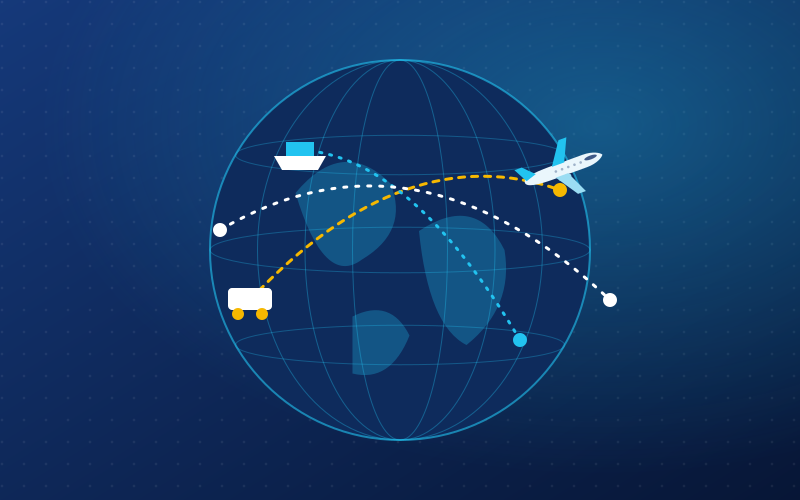
Dispatch planning depends on cut-off times, vehicle availability and delivery windows. For importers, goods arriving from ports or airports flow into storage after customs clearance. For exporters, goods are consolidated, packed and staged before movement to the port. Coordinating these hand-offs reduces idle time and storage cost. If your cargo is moving internationally, see how customs clearance and freight forwarding fit alongside warehousing.
Which metrics should you track?
| Metric | What it tells you |
|---|---|
| Inventory accuracy | How closely system records match physical stock |
| Order accuracy | Share of orders dispatched without errors |
| On-time dispatch | Whether orders leave when promised |
| Dock-to-stock time | How quickly received goods become available |
| Space utilisation | How well storage capacity is used |
| Damage and return rates | Handling and packing quality |
Set your own targets based on your products and customers, and review trends over time rather than single readings.
Should you run your own warehouse or outsource?
Owning or leasing a facility offers control but ties up capital and requires staff, systems and compliance management. Third-party warehousing offers flexibility: you can scale space up or down and use the provider’s handling expertise. Consider order volume, seasonality, product handling needs and how much control you need. Our contract logistics page covers longer-term outsourced arrangements, and the supply chain management guide explains how warehousing fits into the larger picture.
What are common mistakes?
- Poor receiving discipline, leading to wrong counts that persist for months.
- No defined locations, so staff rely on memory.
- Ignoring slow-moving or obsolete stock until it becomes costly.
- Mismatch between sales promises and warehouse capacity.
How United Cargo & Travels can help
United Cargo & Travels Pvt. Ltd., based in New Delhi, supports importers and exporters with warehousing, transport, freight forwarding, customs clearance support and EXIM consultancy. Scope and timelines depend on the cargo, route and documents involved, so we review each enquiry individually. To discuss your requirement, request a quote.